If you like what you see here, like me on facebook and follow me on twitter for more tips and to follow what is going on at the Home Front!

Showing posts with label Healthy Living. Show all posts

Five Great Soaps to Prep!


By Stephanie Dayle
I originally wrote this article for the American Preppers Network website. I am reposting my articles here, of course with permission. 


If you could only prep one kind of soap, what would it be? 


There are always hundreds of answers to that question because there really isn’t a single ‘best’ soap to store; almost any soap is good to stock up on compared to none at all.  If they have to, people can make do cleaning most things with just about any common soap.  If you make your own soap, that is a very frugal and admirable skill.  Homemade soap is  a good option if you have time to make extra and stock up on it click here to see an article on how to make your own bar soap! 

The important thing I cannot stress enough is having a supply soap on hand for hygiene and sanitation if the store is sold out or closed.  In the midst of an emergency or disaster you may not have time to make soap, instead keep a years supply on hand at all times.
All soaps have strengths and weaknesses; here are five soaps that have multiple uses that make them ideal for storage and emergency use. Maybe one of these soaps will work for you!
1) Dawn:  (or an equivalent) dish washing detergent:   Dawn is well-known for getting dishes clean, but did you know that it is well-known for doing that even with cold water?  Their website encourages people to try washing dishes in cold water to conserve power.  This would also be handy in the event of a long-term power outage.  Dawn is also commonly used as shampoo to remove product build-up and strip excess oil.  Because Dawn is non-toxic and biodegradable you can make an insecticide with it (as well as from other biodegradable soaps) by diluting it with water.  Other insects such as ants tend to avoid treated areas also making it a repellant.  Dawn also makes an effective flea bath for cats and dogs.
The grease busting power of Dawn makes it an acceptable substitute for laundry detergent and/or a pre-treatment for tough stains. (Although care must be taken not to add too much Dawn or there will be an overflow of bubbles and trouble with rinsing.)  Mixed with boiling water Dawn can also help clear a grease clogged drain in the kitchen and it makes an effective glass cleaner when just a drop or two is added to vinegar and water.  Dawn detergent will store for years and remain effective; however, the soap may separate if exposed to extreme temperature swings.
2) Ivory:  Classic Ivory soap is biodegradable; it was originally marketed as a laundry soap bar and is still used in many different homemade laundry soap recipes.  If doing laundry by hand the old-fashioned way, classic Ivory is still capable of getting your clothes clean and residue free.  Because bars of Ivory floated in water it became a popular bathing soap.
Today Classic Ivory still has many uses.  Bars of Ivory soap can also be used as an insecticide by grating it first then melting it down with heated water to create a liquid soap.  The resulting liquid Ivory can also be used for dish washing, and shampooing.  Since Classic Ivory soap is only lightly scented, floats, and is free from many of the additives that make other soaps undesirable for environmental and health concerns, it’s a very popular choice for campers and preppers. Classic Ivory bar soap will store indefinitely without any additional treatment.  Be sure to look for the “It Floats!” slogan and “99 44/100% Pure” statement on the label.  There are several different types of Ivory now, and the Classic Ivory bars are the only ones that float, the formula on the rest of Ivory’s products are different.
3) Soap Flakes:  Soap Flakes is another product that was originally invented as laundry soap because it was much easier to dissolve them in warm water than it was to grate down a solid bar of soap.  Soap Flakes are pure soap in a flake form; they are made from a 100% vegetable base of palm and coconut oils.  They contain no bleaches, phosphates, enzymes, or perfumes and are completely biodegradable.  Soap Flakes can be used as laundry soap, dish soap, body soap, and as a general household cleaner.  They are notably mild and frequently recommended for the cleaning of children’s toys, laundry, and even as a children’s bath soap.
For years Soap Flakes were our grandmother’s choice for hand washing dedicates and wool.  They will store for years in their dry form, are light weight, and are easy to dissolve for any of the above uses. Soap Flakes’ friendliness to the environment and light weight have made them a popular choice for backpackers and campers for years, for this reason they are also a common item in bug out bags.
4) Fel’s Naptha:  Fel’s -Naptha was originally invented and marketed as a heavy-duty laundry soap bar and still is today.  The potent bars of Fel’s-Naptha are most commonly used as a pre-treatment for stains and they frequently out perform their higher priced spray bottle competitors in that area.  Fel’s-Naptha is the current best-selling choice for those who make their own laundry detergent. When combined with ingredients like borax and washing soda, a single bar of Fel’s-Naptha will last nearly a year.  How is that for cost efficient?
Fel’s-Naptha can also be used to treat poison ivy, poison oak, or sumac rash when used just after exposure occurs.  The soap will break up the oils from the plants, which contain the toxins.  It can also be used in bathrooms to remove soap scum and in the garden as an insecticide.  Fel’s-Naptha is not flawless however, as it still contains strong perfumes, additives for color, and shouldn’t be used on the skin as a replacement for regular body soap.  Fel’s-Naptha once contained Stoddard solvent, which is a known eye irritant, but according to their website the soap no longer contains the solvent.  Fel’s-Naptha soap, like Ivory, will store indefinitely with no additional treatment.
5) Dr. Bronner’s Magic Soap:  Dr. Bronner’s Magic Soap is a liquid Castile soap.  Castile soap is a name used for olive oil based soaps, which are frequently noted for their mildness.  For years Dr. Bronner’s has been one of the best-selling holistic soaps on the market with good reason.  Dr. Bronner’s Magic Soap also has many uses, it comes in several different scents including un-scented and it’s completely biodegradable. 
Dr. Bronner’s Magic Soap can be used for everyday washing, shampooing, dish washing, as a shaving cream, for tooth brushing (although I have heard the taste is awful), for laundry, for household cleaning and its high glycerin content allows it to be used as a leather soap in a pinch.  Parenting forums have claimed the tea tree variety of Dr. Bronner’s is effective in treating and repelling lice and fleas.  Dr. Bronner’s Magic Soap will store for long periods of time but, like other liquid soaps, may separate if exposed to dramatic shifts in temperature - this would not effect the cleaning power of the soap.
So if you could only prep one kind of soap, what would it be?  Please feel free to leave your comments and ideas for others!

Adding Vitamins to Your Preps - What You Need to Know

By Stephanie Dayle


The following is not medical advice or a medical recommendation. I am not a doctor or lawyer, if you have a medical question seek the assistance of a medical professional. 


Why Do I Need to Store Vitamins? 

Vitamins are commonly found on the food storage lists of people who practice emergency preparedness, because as stored food ages the vitamins within the food degrades. Therefore, if they are faced with a long term emergency in which they find themselves relaying heavily on their food storage or on reduced rations there is a good chance that they may also be suffering from one or more vitamin deficiencies as time goes on.

Vitamin deficiencies are serious and can even cause death. Diseases like scurvy, rickets, and night blindness are all caused by vitamin deficiencies. Click here to see the top 10 vitamin deficiencies that still exist today.

While there are other options to get extra nutrients even when confined indoors, like eating sprouts, to guard against vitamin deficiencies many preppers add vitamins to their emergency supplies.

All vitamins are equal, and any vitamin is better than no vitamin at all right? Or so many retailers would like you to believe. In fact, they aren't equal at all.

What Kind of Vitamin is Best?

Many grocery store vitamins, including Centrum and OneADay aren't the best quality on the market; don't even get me started on gummy vitamins. Besides the fact that gummies are full of sugar, artificial flavors, and artificial colors - along with most grocery store vitamins gummies are SYNTHETIC vitamins. They are also full of citric acid (vitamin C) and because the gelatin sticks to your teeth and/or your kid's teeth, it eats away at the tooth enamel where as with normal vitamins there would be little or no contact with your teeth.

Why go through the trouble of avoiding GMOs and growing your own organic food only to go buy and consume synthetic vitamins made in a lab?  Why not get good "whole food" vitamins?? From companies with good ethics. Apply the same values that you adhere to with your food, to your everyday vitamins AND your emergency supply.


"Food based or whole food vitamins" are vitamins that come from actual food and are not made in a lab. When you read the ingredient list you won't see yellow number 5, and calcium carbonate (which is more like a rock than a digestible form of calcium, its one of the worst forms of calcium on the market) you will instead see CARROTS, WILD BLUEBERRIES, ETC....  they even have organic, vegan and gluten-free whole food vitamins.

Some of the companies that make those synthetic vitamins are also owned by the same companies we complain about not wanting them to mess with our FOOD! Centrum is owned by Pfizer (source). One-A-Day you ask? Owned by Bayer (source)! So, if you don't want them messing with your food or with seeds from which your food grows, why would you buy their vitamins?

There are a few that are independently owned companies out there and if you choose to stay with synthetics, independent companies, like Nature Made are not a bad way to go. Costco's Kirkland line  continues to be ranked exceedingly well in the synthetic category. Supposedly NBTY manufactures the Kirkland line up of vitamins, but I can't confirm that. NBTY manufactures Natures Bounty.


Synthetic VS Whole Food Vitamins Explained

But Vitamins Upset my Stomach

When vitamins upset your stomach or you burp them up all day or they turn your pee day-glow yellow, those are usually side effects of 'synthetic' vitamins (source). Whole food vitamins will not upset your stomach, and you will not burp them up - because they are food, not chemicals (source). Food based vitamins don't smell or taste like normal vitamins and will change your whole opinion of vitamins.

The processing of whole food vitamins excludes the use of heat, pressure and toxic solvents. No chemical or sugar coating is used to seal whole food vitamin tablets and no artificial chemicals are used. Whole food vitamin processing uses fresh, raw food ingredients prepared as food extracts. Your body will use what it needs and the rest goes out in the bathroom. With synthetics you can overdose - and the results can be toxic.


Pills are a Problem?

Swallowing pills a problem? Try a liquid vitamin that is made from "whole foods" they contain all the vitamins and supplements in one single dose that tastes good (about a shot glass). They are highly absorbable and taste way better than they sound. There are many different brands of the liquid vitamins on the market and sugar free varieties as well. They are highly recommend for finicky children, adults that don't like pills (aka: finicky adults), and persons that have had lap-band or gastric bypass surgeries, colostomy surgery etc...

One of my favorite brands of solid 'food based' vitamins is MegaFoods (pictured above). Does this mean that you have use that brand? No. Please do your own research on them. Another reputable brand that is producing affordable whole food vitamins is Swanson. There is enough information out there on the different types of supplements and vitamins that I could literally write forever. There are several different types of calcium on the market some more absorbable than others, there are different types of vitamin C, and magnesium (a few that should be avoided) it is really worth looking into them before you buy.

Whole food vitamins or "food based" vitamins are considerably more expensive than synthetic vitamins therefore they may not be in everyone's price range. In that case synthetic may be your only option for now, but it would still be wise to make sure that what you are using is the best synthetic you can afford.

Which Ones?

Eat what you store, store what you eat. This is a phrase that reminds preppers to rotate their supply and prevent waste. Store the vitamins you are already taking. If you are not currently taking any vitamins or supplements, in my never humble opinion, I would still recommend you prepping them. 

A complete multivitamin once a day is what most experts recommend, so that is a good rule of thumb for prepping vitamins, but if you have special dietary needs and/or take other supplements, then prep those as well. 

Immune boosting vitamins are a common recommendation for daily regimens and emergency supplies. Vitamin D, vitamin C, and Zinc all fall into the category of immune system supporters. There are many reasons why immune supporters my be helpful in a long term emergency. Without emergency medical care old diseases could make a come back, so why not give your immune system a fighting chance? Also being sick puts you at risk in dangerous situations, it robs your energy and alertness. It would benefit everyone to remain healthy.

Folic Acid is a member of the B vitamin family, it is a supplement that is commonly recommended for women who could become pregnant. It helps in the formation of new cells and prevents major birth defects. Like most other B vitamins it has been suggested that folic acid can help our brains cope with stress and depression (source). These things make folic acid and other B vitamins a good choice to add to your daily and emergency supplies.

How to Store Vitamins

Some people assume that "whole food" vitamins will not store as long as their synthetic preservative filled counter parts, but this is not so. The expiration dates are very similar.


This picture above shows a new bottle of MegaFood vitamins with an expiration date two and half years out. This means that you could EASILY maintain and rotate a years supply of vitamins in your home and that is what I recommend, a one year supply. Buy new bottles and put them in the back while rotating the oldest to the front and using that first. This ensures that no vitamins are ever wasted and if something bad were to happen, you'd have at least one year's worth of vitamins if not a little more.

To figure out how many you need for a year's supply, multiple a one day's dose (this is usually one or two tablets per person) by 30 then multiple that number by twelve. Next multiple that number by the number of people in your household, this will give you an approximation of how many tablets you need to have on hand for a year.

In this case, it is best to adhere to the expiration date on the vitamins. Usually when storing things for emergency preparedness many expiration dates can be ignored as they only mean that the manufacture will not guarantee the quality beyond that date. For vitamins (especially high quality ones), if the quality drops this means the vitamins are degrading which defeats the purpose of taking them. Vitamins are best purchased and used before their expiration dates.

Make sure your vitamins are stored sealed in a dark brown preferably glass bottle (like the bottle that these Megafood vitamins come in) in a cool dark place. The bottle the vitamins come in, is usually your best bet for storage you will gain nothing by opening the bottle and vacuum packing them. Quality vitamins are already packed with an oxygen absorber and moisture control - it is difficult to improve upon that.

Making Vitamins Last Longer if You Can't Get More

If hard times have hit and you have taken in extra family or friends make the vitamins you have last longer by taking them once every three days or so. Quality vitamins can sill be effective when taken this way. Even when taken once a week it is better than not at all. Vitamin priority should be given to anyone who is pregnant in your group, the very young and the elderly. Disperse the remaining vitamins to others in your group every couple of days.


Don't forget those handy empty bottles! If you get the nice vitamins with the dark brown glass bottles they are great for storing dried herbs, spices, homemade oils, infusions, and anything else that you'd like to keep away from sunlight.


More Reading:

Synthetic VS Whole Food Vitamins

What's the Difference Between Natural and Synthetic Vitamins?

Understand the Difference - Natural News 


Click here to visit The Home Front General Store for your everyday emergency preparedness needs.


How To Make Your Own Tallow


By Stephanie Dayle - via The American Preppers Network

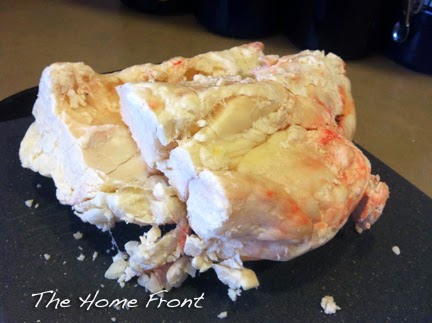
Tallow is rendered beef or sheep fat that is made from suet (pictured below), which is the fat from only around the kidneys or liver. Other beef fat will render down but will not have the same qualities. Rendered tallow is solid at room temperature, and can be stored for extended periods without the need for refrigeration to prevent it from going rancid. This makes it very attractive to those who live off the grid, homestead, or practice emergency preparedness. Tallow can also be made from other animals using the suet fat but beef or sheep tallow is usually preferred.

Making your own tallow, while time consuming, is easy and learning how to make it could be invaluable to emergency preparedness. Making your own tallow means one less thing you need purchase or trade from someone else. Tallow can completely replace your supply of Crisco, it is high in omega 3, vitamin D3, calcium, and contains zero trans-fats. Tallow, being an animal fat is mostly saturated fat. However, it is important to know that recent research has shown saturated fat plays far less of a role in developing heart disease than previously suspected.


The uses for tallow are almost endless. Tallow has a dry waxy texture making it undesirable for sausage and other meat processing, but it does have a high smoke point at 400°F and an even higher flash point ( the temperature at which the oil ignites into flames) which makes it a world class deep frying oil. It is commonly used to make: homemade soap, bio-diesel, leather conditioner, shortening in everyday cooking, tallow candles, and feed for small song birds in the winter time. Historically it has even been used to grease train and steam engine parts and rifles.

Mostly I make tallow for soap and seasoning cast iron (the previously mentioned high smoke point makes it ideal for seasoning dutch ovens). Making tallow is one more way I can make use of the animals we raise for meat so that nothing goes to waste. 

First you will need to gather your supplies:
  • 3lbs (or however much you’d like to do) of Beef Suet – ask your local butcher, grocery store meat departments are often clueless and will just give you any old beef fat. 
  • A slow cooker (this can be done over the stove too – it just requires more supervision)
  • Small wire mesh strainer
  • Lots of Coffee filters
  • Wide mouth quart jar, lid and ring
  • Ladle
  • 2 Quart pot

Beef suet from the store or butcher will always come frozen as suet has a low melting temperature and will begin to melt at room temperature. It is for this reason you should begin to trim and chop it up while it's STILL FROZEN. Be sure to remove any and all meat and as much blood as possible from the fat – this will help ensure that your final product will last a long time without going rancid. Cut your suet up into 1 inch squares, some people then run it through a grater to get even smaller pieces, but I find an inch to work just fine. Feed the tallow trimmings to your dogs, or chickens so nothing is wasted – both animals can process fat better than people and will enjoy the treat.


Put all the cubed fat into your slow cooker and set to high (remember the high smoking point – you aren’t going to burn your tallow in your slow cooker). The rendering process will take a couple of hours – longer if you have bigger chunks of suet. You may want to take your slow cooker outdoors or out to the garage because it will smell. The chunks of fat shrink up and turn a golden brown (these are called cracklings) your tallow is ready to strain.


Now comes the tricky part. Remember tallow is always easier to work with and clean up when it is hot. BUT when it is hot, it can burn you (see below).

Result of not wearing gloves.
 

Wear rubber gloves for some protection and please be very careful!

Ladle the liquid fat and cracklings through the wire mesh strainer into a pre-warmed pot on your stove on low heat. When the slow cooker is empty, take your ladle and press the cracklings in the strainer to extract as much liquid as possible. You can then dry your cracklings and put them on your salad, bake them in cornbread, or eat them like pork rinds. Chickens also LOVE cracklings, my cracklings usually go to the chickens.


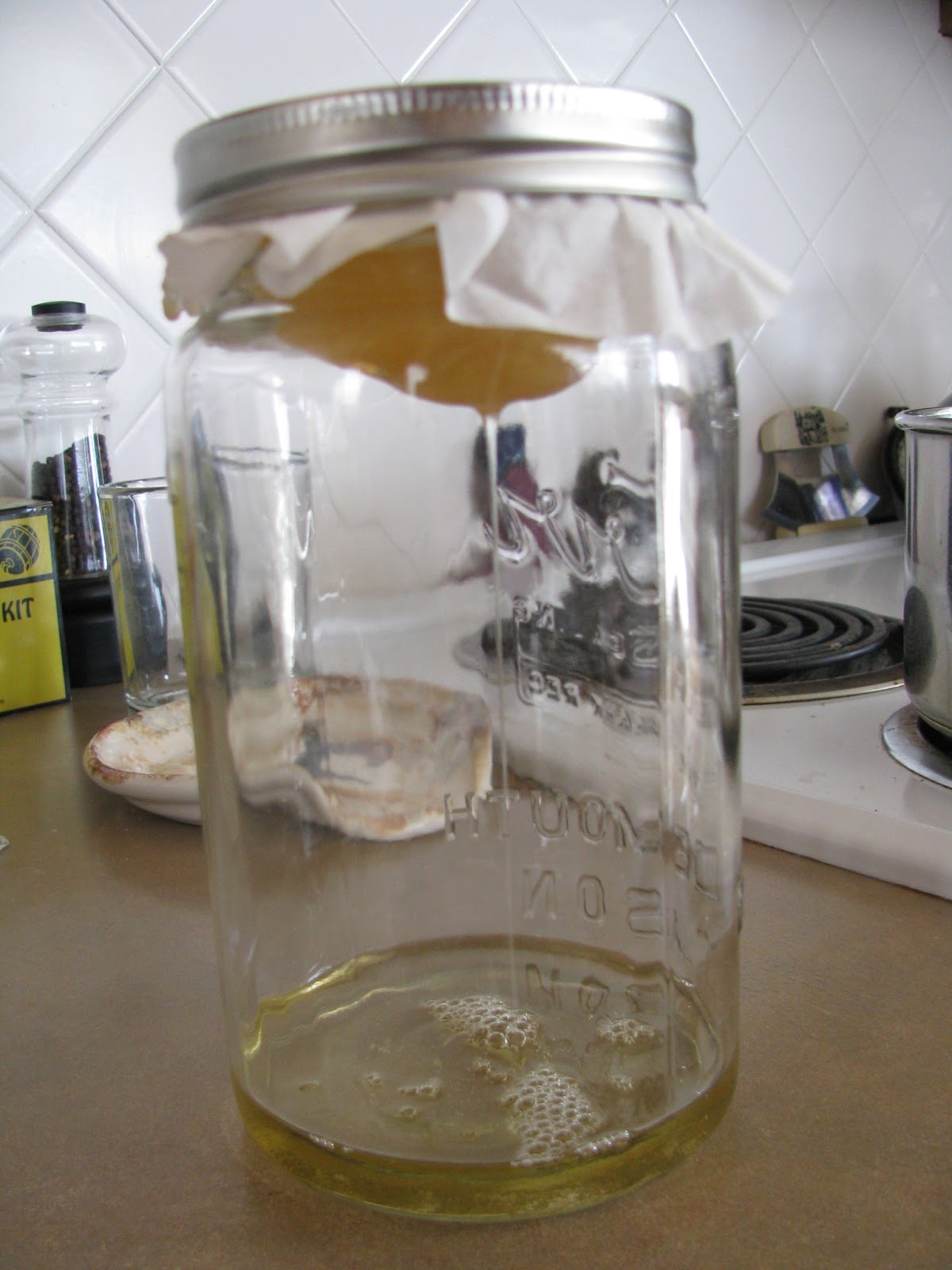
Take a coffee filter and put it over the top of your clean quart jar making a little well for the oil, hold it in place with the ring for the jar as pictured. Next ladle your liquid tallow from the pot to your jar. This will take a long time, be patient and change your coffee filter often as it will clog while removing impurities you don’t want in your tallow. If you cheat and use a paper towel or poke holes in the coffee filter you will have to repeat the whole process to get the purity you need.

Tallow will strain better hot – so if it is just barely dripping, increase the heat on the stove to med-low or medium, just keep an eye on your oil, you will smell it if it gets too hot. This is the slowest part of the process and may need to repeat it if your liquid tallow is still cloudy and/or contains sediment. The more pure your tallow, the longer it will last.

Once you have strained all your liquid tallow into the jar (be careful the jar will be just as hot as the oil) clean up the jar and ring so no grease remains on the rim. While jar is still hot, treat a canning jar lid briefly with boiling water just as you would for canning and set it firmly on your jar of hot tallow. Next apply the now clean canning jar ring. Using oven mittens, set your jar in the fridge and leave it alone. It will seal itself similar to as if you had canned it. Keep your tallow in a cool dry place this way for six months or longer – I have kept tallow good this way for a year. It will turn a pretty snow white color and solidify.


You now have tallow ready for storage, cooking, soap making, or whatever you want to use it for!

Trouble Shooting
Should all rendered tallow will turn a pretty snow white color when its cooled?
Yes it should. Things that would prevent this from happening are: Not completely filtering the impurities completely out of the suet. Solution: heat the tallow back up and run the hot oil through coffee filters and even though it takes forever and you have to change the filter out with every scoop, DO NOT CHEAT, or try 'wet rendering' the suet - you read about that method by clicking here.

Also what might prevent the tallow from turning white is if the butcher shop or meat counter did not actually give you "suet." If they just gave you some random frozen beef fat, that may have been labeled suet - but wasn't actually suet, no matter how much you filter it will not turn a snow white color. Solution: Feed the beef fat you just rendered to wild birds, your chickens, dogs, or use it for soapmaking, just know that it is not going to depart the same qualities to your soap as real tallow would. For the next batch, go to a different store or shop and make sure the fat they give you looks similar to the picture and description above. Real suet should have a unique waxy texture, it should be crumbly when you cut it. 

For more information on saturated fats and health benefits of tallow check out these links:

The Truth About Dairy Bashing

Public Domain Image
I have seen a lot of milk bashing online lately. People and silly little facebook info graphics going on about how milk is unhealthy, all the cows are mistreated, all cows are full of anti-biotics, chemicals and that cows are 'bad' for the environment.  They say it's all 'big food' and processed.....

So here is a reality check. 
Do you know who benefits from Dairy Industry bashing? Stick with me here and I will walk you through this. The number one dairy replacement in the US and globally is..... (drum roll please) SOY. So let's follow the money shall we? Because if you want to find out who is really behind something you have to follow the money honey. 

Do you know how much soy it takes to produce soy milk? Let me help you out - its ALOT. Now, who could possibly benefit from a substantial rise in soy demand?? Hmmm...... why Monsanto (and the other mega seed companies) would, that's who! 

Almost all Soy Milk on the market unless otherwise marked as 'organic' is from GMO soy. Rice Milk, you ask? GMO rice milk and products are coming to a store near you in 2014. Rice grown in the USA and China is already subjected to mutation breeding - what's that? One step below GMO if you ask me. Click here and read about Mutagenic Seed. And there flat out just isn't enough almonds, coconuts or oats being produced to fill the gap on a national scale, so don't even go there.

That being said, riddle me this:
How are GMO crops better for the environment than cows? How is RoundUp Ready Soy milk and products more healthy for people than milk? Is the RoundUp and other chemicals they dump on the crop fields, because they can with the GMO technology BETTER for the environment and our health than cow manure which can be composted and otherwise reused?? Shoot if you want to you can even harvest the methane gas coming off the manure and use it for cooking and all kinds of things. Can you say anything like that about RoundUp and chemicals? Nope.

Cows use too much water you say?
And growing GMO soy doesn't use any water at all huh? Wrong. If you are farmer and shooting for a yield of about 85 bushels you are going to want around 19 INCHES of water on that soy (source). Soy prefers a temperate climate so if you grow it somewhere where it's warm and dry you will have to irrigate that almost completely.

When dairies are located in temperate climates, which are ideal for dairy cows, the water use is negligible. When dairies are located out in the middle of the desert YES they use a lot more water. That's why I say "Happy Cows do NOT come from California, really dang hot and miserable cows out in the dang desert come from California. Dairy cows like to be cool, they do not do well in extreme heat at all, that is why Wisconsin, Michigan, and Washington. PLEASE NOTE: While I understand there are many other responsible and temperate dairy locations in California, I have to say the ones out in the desert are not very responsible and a lot of our nations milk comes from them.

It's also VERY important to understand that not all dairy companies are run poorly like what is commonly described in those silly memes and graphics. There are PLENTY of dairies, even large ones, which treat their cows like loved pets, and have very high quality standards which do not allow for massive antibiotic use. There will always be some companies that have bad practices - but don't let uninformed internet graphics convince you that it is the standard. It is not the standard. It is the exception. 


Photo Credit: Joseph Tylczak

Consolidation (Big Farm) 
It is true that the dairy industry is consolidating but not because the "evil big dairy companies" are maliciously buying the smaller ones up, it's because no one wants to be a dairy farmer anymore! It's too much work! It's too dirty! Cows smell! Farmer's children have no interest at all in coming home from college to run the family dairy.  We are nation of nearly helpless babies without our technology, and our own laziness is going to bring us down.  The demand for dairy products has not decreased so since their is less small dairy farms someone has to pick up the slack. This is not a conspiracy, its math! 

Which dairy companies have high standards?
Try Darigold products, there are others also. Tilamook is another good company with high dairy standards.  Darigold is a cooperative of Dairy Farmers based out of the Northwest headquartered out of Seattle. So the farmers are owners too. They have  exceedingly high standards, test their milk constantly, have strict limits and rules on what medication can be used on the cows, AND they have no problem booting someone out of the cooperative if their milk isn't up to par (I have seen this happen myself. A neighbor of ours lost his membership to Darigold because his milk wasn't testing clean enough and the antibiotic levels were too high. As a result he joined up almost immediately with a different company that had lower standards - I cannot name them in this article but let me say this -- when it comes to milk, cheaper is not always best.  If you really want to know email me).  

Public Domain Image

To be a Darigold dairy producer your cows have a full time dietitian - that's right, a dietitian.  I can't even afford to see a dietitian but I am glad the cows that make my milk do. Happy cows make good milk, and cows that eat only the best, produce the best milk. In my never humble opinion Darigold milk and products are one step below organic, the only way you could do better is to buy pasture fed organic. 

I start my morning out everyday with a glass of raw milk (better than anything that is pasteurized).  Raw milk is not dangerous or poisonous and contains a lot of good stuff that is killed and removed in the pasteurization process. I believe everyone over the age of two should be drinking raw milk every day, we'd all have healthier guts and less allergies, but that's just my opinion.

Always Question What you Share
Dairy farmers in general are self reliant, God fearing, hard working people, the only reason why they aren't online defending themselves is because they are too dang busy running their dairies. So when you see misinformation like that on the internet from now on - ALWAYS question "who benefits from this message?" And stop following that page or blog, they don't know what they talking about and merely pushing an agenda that is NOT helping anyone.

The "food conspiracy" propaganda is full of misinformation, and untruths and people accept it as fact and spread it around because it's easy to believe. No one is saying that there aren't problems with our nations food supply, but what these conspiracies present is not always the truth. To fix things decisions need to be made on facts and real world experience NOT conspiracy theories and food marketing propaganda.

I don't have all the answers - but I do know one good step is to start growing and producing your own food.


Not On the Band Wagon


I don't jump on band wagons, I just don't. They are usually driven by people with somewhat good intentions, but are followed by alot of people who don't know any real depth about the subject and were swooned by a few key points. The band wagon is maintained and fueled by those who make money off of the gullible, partially educated, but very intense followers. So I let them pass and make my own way. 

Oh, but I am not talking about you right? Or am I? You decide.

Case in point - I didn't jump on the 'demonizing commercial farms' band wagon.  Why?

  • There aren't enough small 'local' farms in the country to feed everyone, let alone meet all of our export requirements (because remember we are the bread basket of the world, this isn't just a saying - millions would go hungry if it wasn't for our cheap wheat and corn). As of right now, those farms are necessary to feed us and hundreds of other countries. This isn't "propaganda" - its math. 
  • Not all commercial farms are as bad as the movie Food Inc, it's lovely Facebook page (and the other half million anti 'big food' pages it has spawned) portrays them to be.  Animals in most farms are very well treated and cared for, there will ALWAYS be exceptions, but the exceptions are not the norm - regardless of how much PETA and the Humane Society would like you to believe that it is the norm. They are the few. With a little research and asking around in the industry you can figure out which companies work with good farms, which ones do not, and which companies have high standards.
  • You have to ask yourself, honestly, why is commercial food the way it is today? And take responsibility. 

Our food is mass produced the way it is today because we (the American public) have asked for it with our dollar.

The American public wants CHEAP food. Even WE preppers want cheap food. How many times are food prices, deals, and coupons talked about on blogs, prepping sites and Facebook a day???? The American public also wants SAFE food. They want food that they can buy out of the freezer section - take home (make a few stops, pick up kids, you know) set the food on the counter, get stuff put away, then get around to putting the food in the freezer, where it is re-froze, THEN GET IT OUT another day, thaw it, cook it, eat it AND....(this is where it gets good).... NOT GET SICK. That's important - when people get sick - there is a public out cry (the "evil" food companies aren't being clean enough!!). That's right, place the blame on someone else. I raise my own meat, and I would never do that crap with our meat - I'd get sick.

The economy sucks, everyone is on a budget and everyone wants the best deal that they can afford. Historically when faced with the option of a healthier non-GMO, organic, heirloom product or a cheap product of dubious origins the american people have chosen time and time again - the cheap stuff. We want our food, we want it fast, and cheap. We don't want to have to cook it, we don't want to have to grow it, we don't want it to make us sick and we don't want to actually have to do any "work" to get it.

Thus we have the system we have today - and instead of taking responsibility for it, and correcting it -- by starting with ourselves we BLAME. Blame the food industry, blame the government, blame GMOs and the companies that sell them, blame commercial farms, bad bad bad. Instead of taking our food into our own hands we cry out to the government (the same one that helped us get into this mess) to protect us! With more regulations! More rules! Labeling laws! Etc etc etc....

It. Will. Never. Work.

If the American public asks for better food, safer food, and more healthy food with their dollar, the market will respond (this is how capitalism and free markets work - no one wants to be selling the product everyone hates, therefore they will start selling what everyone wants to buy). It will not be an instant fix, but over the years will the market will respond without *any* new laws. Look at high fructose corn syrup and MSG. Everyday I am seeing more and more products without those ingredients. This is because people don't want them any more, and the market is responding. And lets not forget, the best option - the I hear about the least,  is and has always been for you to grow your own food and not depend on new laws, markets or others for your food and health.

I know lots of farmers, they are honest, hard working, self reliant, and down to earth people. I have spent time on chicken farms, dairy farms and wheat farms.  I have seen why decisions are made. I have seen the issue from both sides. THIS is why i am not on that particular band wagon. 

Stay tuned to see what other band wagons I pass on.


Homemade Dishwasher Soap – Save Money Right Now


By Stephanie Dayle - via The American Preppers Network

(This is one of my most popular articles at APN - click on the link above to check out all the comments on this one over there too!)

Most of the time I hand wash all of my dishes mostly to conserve water and power, but sometimes I am just too busy taking care of the garden, farmstead and working.  Lots of people involved in emergency preparedness and homesteading, get real busy in the summer with food preservation, their garden, and camping, so there is no shame in leaning on the dishwasher during this season.  Plus that ‘sanitize’ cycle sure comes in handy when you are washing up box after box used canning jars you just bought at that yard sale up the road.  Here is a recipe for homemade dishwasher soap that will save you some money and you can bank on the fact that its better for you and the environment than the store-bought stuff. Use the extra money on your emergency preparedness items!

Again, there are different versions of this recipe all over the internet.  If you don’t like mine, just search for “homemade dishwasher soap” and you will see many others.  I have tinkered with this one a lot, and finally have the way I like it.  It works really well, and I will never go back to store-bought detergent.  Homemade dishwasher detergent is going to depend a lot on your water.  Is is hard water or do you have a softener?  Is there a lot of iron in it?  (if so, increase the amount of vinegar you use.)  This is because  getting your dishes clean is a snap, getting them shiny and residue free is kind of tricky, as most of that has to do with the type of water you have.

This is what works the best for me.  To maximize your savings, try to get all these ingredients as cheaply as possible.   Price shop, and keep a note who carries them at the lowest prices.  Personally, I stock up on these ingredients to take advantage of sales.  But not to prep them, because almost any long-term emergency will include a power outage and this recipe is specific to dishwashers.  The last time I calculated the cost per load for this it came in at 3 cents a load.

 DIY Dishwasher Detergent
  • 1.5 cup Washing Soda  (washing soda is a natural water softener, abrasive, and is pure cleaning power – baking soda will only act as an abrasive and is not nearly as effective as washing soda, so I just leave it out)
  • 1/2 cup Borax  (Borax – again, an abrasive not super effective, but I have found it helps with glass, which seems to need a finer abrasive)
  • 1/4 cup Citric Acid (citric acid, which is also used in canning, will counter your washing soda, so you have to be very conservative with it.  But it can be the only way to deal with some hard water marks and residue)
  • OPTIONAL: 1/2 – 1 teaspoon of Dawn  (this just adds more cleaning power – be very careful with it though, just a small amount or you’ll end up with an overflow of suds all over your kitchen floor)
  • Some people add salt  (I don’t bother with salt either – it is used as an abrasive and as a softener, since washing soda AND borax also act as a softener, I didn’t find that it added anything to the existing recipe)
Double or triple the recipe as needed.  Combine ingredients and shake up real well.   1/4 cup in your “Wash” compartment should be all you need for a whole load of dishes!  If using a long cycle, go ahead and sprinkle some in your “Pre-Wash” compartment as well.

I have had great luck using vinegar in the “Rinse Aid” compartment to help get my dishes shiny and residue free.  Since we have fairly hard water, I ALSO add a splash in the bottom of the washer before starting a load.  I found that it made a huge difference.  Be proud of your efforts!  Don’t hide them – post a picture of your finished product on Facebook, and see who messages you for the recipe.


If you put a little Dawn in your soap mix, it will have a fragrance.  If you don’t and you need it to smell, you can add 5 drops of lemon essential oil to this mix.  Sometimes our obsession with fragrances baffles me, as I think its nice when things don’t smell all the time.  Walking down the cleaning section at the grocery store sends me into a sneezing fit.  So keep in mind that by the time your dishes are washed – if your recipe has done its job, your dishes will not smell anyways.  So you might not need the essential oils.

You can add this recipe to a half gallon jar, and keep it under your sink.  Since you are adding a little liquid to dry ingredients expect some clumping.  The next day, get it out and break up the clumps with a fork, and mix it up again real well.  If you want to avoid future clumps you can add a marshmallow or piece of bread to it – just like you do for brown sugar!
Also click here to check out my recipe for Homemade Laundry Detergent!  It is more compact than many of the recipes on the web, and it has a little more cleaning power as well.  It will also save you money and uses many of the same ingredients as I listed here! I like keeping products around that have more than once use.

Frugal TIP: In my area, the best price on Mule Team Borax can be found at Target.  Best price on Washing Soda I can find is usually at Wal-Mart, but I have seen it lower  at Bi-Mart.  The best prices I have seen on Citric Acid were at Wal-Mart, during canning season and Bi-Mart also during canning season.  If you can’t find it there, look at your local Health Food Store!  And you can’t beat Costco or Cash and Carry stores for vinegar prices!  For the price of a gallon of vinegar at the grocery store, you can buy two at Costco – but supporting your local grocers is also important.

Questions?  Have a good recipe of your own??  Share it here!  Remember to include what type of water you have at your house to help others, and stay tuned for more money-wise articles!
There are many homemade dishwashing recipes out there on the internet, any similarities are merely coincidental. 

Most Popular Posts