If you like what you see here, like me on facebook and follow me on twitter for more tips and to follow what is going on at the Home Front!

Showing posts with label Homemade Soap. Show all posts

Five Great Soaps to Prep!


By Stephanie Dayle
I originally wrote this article for the American Preppers Network website. I am reposting my articles here, of course with permission. 


If you could only prep one kind of soap, what would it be? 


There are always hundreds of answers to that question because there really isn’t a single ‘best’ soap to store; almost any soap is good to stock up on compared to none at all.  If they have to, people can make do cleaning most things with just about any common soap.  If you make your own soap, that is a very frugal and admirable skill.  Homemade soap is  a good option if you have time to make extra and stock up on it click here to see an article on how to make your own bar soap! 

The important thing I cannot stress enough is having a supply soap on hand for hygiene and sanitation if the store is sold out or closed.  In the midst of an emergency or disaster you may not have time to make soap, instead keep a years supply on hand at all times.
All soaps have strengths and weaknesses; here are five soaps that have multiple uses that make them ideal for storage and emergency use. Maybe one of these soaps will work for you!
1) Dawn:  (or an equivalent) dish washing detergent:   Dawn is well-known for getting dishes clean, but did you know that it is well-known for doing that even with cold water?  Their website encourages people to try washing dishes in cold water to conserve power.  This would also be handy in the event of a long-term power outage.  Dawn is also commonly used as shampoo to remove product build-up and strip excess oil.  Because Dawn is non-toxic and biodegradable you can make an insecticide with it (as well as from other biodegradable soaps) by diluting it with water.  Other insects such as ants tend to avoid treated areas also making it a repellant.  Dawn also makes an effective flea bath for cats and dogs.
The grease busting power of Dawn makes it an acceptable substitute for laundry detergent and/or a pre-treatment for tough stains. (Although care must be taken not to add too much Dawn or there will be an overflow of bubbles and trouble with rinsing.)  Mixed with boiling water Dawn can also help clear a grease clogged drain in the kitchen and it makes an effective glass cleaner when just a drop or two is added to vinegar and water.  Dawn detergent will store for years and remain effective; however, the soap may separate if exposed to extreme temperature swings.
2) Ivory:  Classic Ivory soap is biodegradable; it was originally marketed as a laundry soap bar and is still used in many different homemade laundry soap recipes.  If doing laundry by hand the old-fashioned way, classic Ivory is still capable of getting your clothes clean and residue free.  Because bars of Ivory floated in water it became a popular bathing soap.
Today Classic Ivory still has many uses.  Bars of Ivory soap can also be used as an insecticide by grating it first then melting it down with heated water to create a liquid soap.  The resulting liquid Ivory can also be used for dish washing, and shampooing.  Since Classic Ivory soap is only lightly scented, floats, and is free from many of the additives that make other soaps undesirable for environmental and health concerns, it’s a very popular choice for campers and preppers. Classic Ivory bar soap will store indefinitely without any additional treatment.  Be sure to look for the “It Floats!” slogan and “99 44/100% Pure” statement on the label.  There are several different types of Ivory now, and the Classic Ivory bars are the only ones that float, the formula on the rest of Ivory’s products are different.
3) Soap Flakes:  Soap Flakes is another product that was originally invented as laundry soap because it was much easier to dissolve them in warm water than it was to grate down a solid bar of soap.  Soap Flakes are pure soap in a flake form; they are made from a 100% vegetable base of palm and coconut oils.  They contain no bleaches, phosphates, enzymes, or perfumes and are completely biodegradable.  Soap Flakes can be used as laundry soap, dish soap, body soap, and as a general household cleaner.  They are notably mild and frequently recommended for the cleaning of children’s toys, laundry, and even as a children’s bath soap.
For years Soap Flakes were our grandmother’s choice for hand washing dedicates and wool.  They will store for years in their dry form, are light weight, and are easy to dissolve for any of the above uses. Soap Flakes’ friendliness to the environment and light weight have made them a popular choice for backpackers and campers for years, for this reason they are also a common item in bug out bags.
4) Fel’s Naptha:  Fel’s -Naptha was originally invented and marketed as a heavy-duty laundry soap bar and still is today.  The potent bars of Fel’s-Naptha are most commonly used as a pre-treatment for stains and they frequently out perform their higher priced spray bottle competitors in that area.  Fel’s-Naptha is the current best-selling choice for those who make their own laundry detergent. When combined with ingredients like borax and washing soda, a single bar of Fel’s-Naptha will last nearly a year.  How is that for cost efficient?
Fel’s-Naptha can also be used to treat poison ivy, poison oak, or sumac rash when used just after exposure occurs.  The soap will break up the oils from the plants, which contain the toxins.  It can also be used in bathrooms to remove soap scum and in the garden as an insecticide.  Fel’s-Naptha is not flawless however, as it still contains strong perfumes, additives for color, and shouldn’t be used on the skin as a replacement for regular body soap.  Fel’s-Naptha once contained Stoddard solvent, which is a known eye irritant, but according to their website the soap no longer contains the solvent.  Fel’s-Naptha soap, like Ivory, will store indefinitely with no additional treatment.
5) Dr. Bronner’s Magic Soap:  Dr. Bronner’s Magic Soap is a liquid Castile soap.  Castile soap is a name used for olive oil based soaps, which are frequently noted for their mildness.  For years Dr. Bronner’s has been one of the best-selling holistic soaps on the market with good reason.  Dr. Bronner’s Magic Soap also has many uses, it comes in several different scents including un-scented and it’s completely biodegradable. 
Dr. Bronner’s Magic Soap can be used for everyday washing, shampooing, dish washing, as a shaving cream, for tooth brushing (although I have heard the taste is awful), for laundry, for household cleaning and its high glycerin content allows it to be used as a leather soap in a pinch.  Parenting forums have claimed the tea tree variety of Dr. Bronner’s is effective in treating and repelling lice and fleas.  Dr. Bronner’s Magic Soap will store for long periods of time but, like other liquid soaps, may separate if exposed to dramatic shifts in temperature - this would not effect the cleaning power of the soap.
So if you could only prep one kind of soap, what would it be?  Please feel free to leave your comments and ideas for others!

How To Make Your Own Tallow


By Stephanie Dayle - via The American Preppers Network

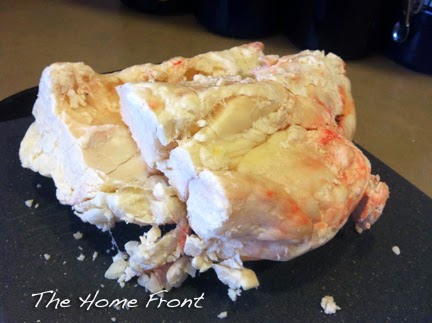
Tallow is rendered beef or sheep fat that is made from suet (pictured below), which is the fat from only around the kidneys or liver. Other beef fat will render down but will not have the same qualities. Rendered tallow is solid at room temperature, and can be stored for extended periods without the need for refrigeration to prevent it from going rancid. This makes it very attractive to those who live off the grid, homestead, or practice emergency preparedness. Tallow can also be made from other animals using the suet fat but beef or sheep tallow is usually preferred.

Making your own tallow, while time consuming, is easy and learning how to make it could be invaluable to emergency preparedness. Making your own tallow means one less thing you need purchase or trade from someone else. Tallow can completely replace your supply of Crisco, it is high in omega 3, vitamin D3, calcium, and contains zero trans-fats. Tallow, being an animal fat is mostly saturated fat. However, it is important to know that recent research has shown saturated fat plays far less of a role in developing heart disease than previously suspected.


The uses for tallow are almost endless. Tallow has a dry waxy texture making it undesirable for sausage and other meat processing, but it does have a high smoke point at 400°F and an even higher flash point ( the temperature at which the oil ignites into flames) which makes it a world class deep frying oil. It is commonly used to make: homemade soap, bio-diesel, leather conditioner, shortening in everyday cooking, tallow candles, and feed for small song birds in the winter time. Historically it has even been used to grease train and steam engine parts and rifles.

Mostly I make tallow for soap and seasoning cast iron (the previously mentioned high smoke point makes it ideal for seasoning dutch ovens). Making tallow is one more way I can make use of the animals we raise for meat so that nothing goes to waste. 

First you will need to gather your supplies:
  • 3lbs (or however much you’d like to do) of Beef Suet – ask your local butcher, grocery store meat departments are often clueless and will just give you any old beef fat. 
  • A slow cooker (this can be done over the stove too – it just requires more supervision)
  • Small wire mesh strainer
  • Lots of Coffee filters
  • Wide mouth quart jar, lid and ring
  • Ladle
  • 2 Quart pot

Beef suet from the store or butcher will always come frozen as suet has a low melting temperature and will begin to melt at room temperature. It is for this reason you should begin to trim and chop it up while it's STILL FROZEN. Be sure to remove any and all meat and as much blood as possible from the fat – this will help ensure that your final product will last a long time without going rancid. Cut your suet up into 1 inch squares, some people then run it through a grater to get even smaller pieces, but I find an inch to work just fine. Feed the tallow trimmings to your dogs, or chickens so nothing is wasted – both animals can process fat better than people and will enjoy the treat.


Put all the cubed fat into your slow cooker and set to high (remember the high smoking point – you aren’t going to burn your tallow in your slow cooker). The rendering process will take a couple of hours – longer if you have bigger chunks of suet. You may want to take your slow cooker outdoors or out to the garage because it will smell. The chunks of fat shrink up and turn a golden brown (these are called cracklings) your tallow is ready to strain.


Now comes the tricky part. Remember tallow is always easier to work with and clean up when it is hot. BUT when it is hot, it can burn you (see below).

Result of not wearing gloves.
 

Wear rubber gloves for some protection and please be very careful!

Ladle the liquid fat and cracklings through the wire mesh strainer into a pre-warmed pot on your stove on low heat. When the slow cooker is empty, take your ladle and press the cracklings in the strainer to extract as much liquid as possible. You can then dry your cracklings and put them on your salad, bake them in cornbread, or eat them like pork rinds. Chickens also LOVE cracklings, my cracklings usually go to the chickens.


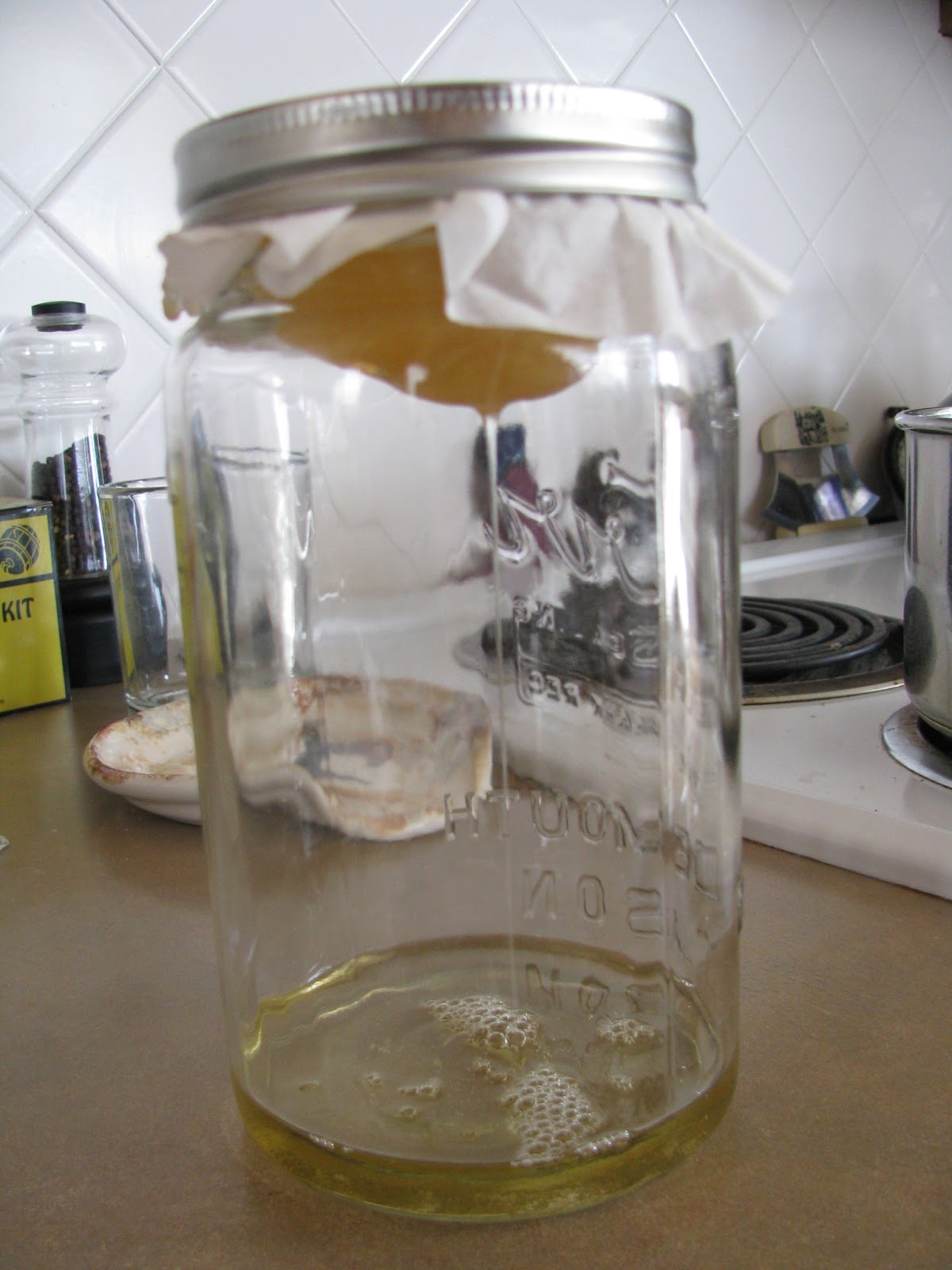
Take a coffee filter and put it over the top of your clean quart jar making a little well for the oil, hold it in place with the ring for the jar as pictured. Next ladle your liquid tallow from the pot to your jar. This will take a long time, be patient and change your coffee filter often as it will clog while removing impurities you don’t want in your tallow. If you cheat and use a paper towel or poke holes in the coffee filter you will have to repeat the whole process to get the purity you need.

Tallow will strain better hot – so if it is just barely dripping, increase the heat on the stove to med-low or medium, just keep an eye on your oil, you will smell it if it gets too hot. This is the slowest part of the process and may need to repeat it if your liquid tallow is still cloudy and/or contains sediment. The more pure your tallow, the longer it will last.

Once you have strained all your liquid tallow into the jar (be careful the jar will be just as hot as the oil) clean up the jar and ring so no grease remains on the rim. While jar is still hot, treat a canning jar lid briefly with boiling water just as you would for canning and set it firmly on your jar of hot tallow. Next apply the now clean canning jar ring. Using oven mittens, set your jar in the fridge and leave it alone. It will seal itself similar to as if you had canned it. Keep your tallow in a cool dry place this way for six months or longer – I have kept tallow good this way for a year. It will turn a pretty snow white color and solidify.


You now have tallow ready for storage, cooking, soap making, or whatever you want to use it for!

Trouble Shooting
Should all rendered tallow will turn a pretty snow white color when its cooled?
Yes it should. Things that would prevent this from happening are: Not completely filtering the impurities completely out of the suet. Solution: heat the tallow back up and run the hot oil through coffee filters and even though it takes forever and you have to change the filter out with every scoop, DO NOT CHEAT, or try 'wet rendering' the suet - you read about that method by clicking here.

Also what might prevent the tallow from turning white is if the butcher shop or meat counter did not actually give you "suet." If they just gave you some random frozen beef fat, that may have been labeled suet - but wasn't actually suet, no matter how much you filter it will not turn a snow white color. Solution: Feed the beef fat you just rendered to wild birds, your chickens, dogs, or use it for soapmaking, just know that it is not going to depart the same qualities to your soap as real tallow would. For the next batch, go to a different store or shop and make sure the fat they give you looks similar to the picture and description above. Real suet should have a unique waxy texture, it should be crumbly when you cut it. 

For more information on saturated fats and health benefits of tallow check out these links:

What NOT to Prep – 3 Common Misconceptions

By Stephanie Dayle via - The American Preppers Network


That’s right, I said “what NOT to prep.”  If you have made the decision to start preparing, you are experiencing information overload.  When I first started to prepare, I was told and read so much advice on what to prep I came to the conclusion that I should just prep everything!  Well yes, and no.

Questioning the information that you read about prepping on the internet - even my information, is a good thing! Incomplete or in accurate information distracts people who are new to the concept of prepping from focusing on what will save their lives, doing your own research helps fill the gaps of these information holes.  Therefore I always in encourage people to do their own research.

These are some common items I have chose NOT to prep after learning some skills, doing a lot of reading and some testing - you may choose to do differently and that is your right, however this is what I have decided to do and why. I will add more things in future articles.  Always base your preps on common sense, think things through, ask yourself; how will this work in a stressful situation where you will not have the luxury of time?

Three Things  I do NOT Prep.


A Year’s Supply of Toilet Paper:  Although it is nice to have, millions of people live perfectly clean (some may even argue cleaner) and sanitary lives without it by simply using water and soap to clean themselves. Therefore I don't see it as must, I see TP as a luxury item. I wouldn't even stock it for a barter item because I don't believe in prepping barter items.  Stocking TP is bulky (even if you remove the cardboard and vacuum pack it), and not everyone has the room for a year’s supply.  I keep only three months supply of TP on hand for that reason, food and water is more important (I'm sorry it just is).  If something bad happens and we use it up, we will switch to our plan B.  Any “plan B” needs to be time effective.  It is not time effective to pulp the fiber and make toilet paper, chances are you will have far too many other things to do in a prolonged ‘grid down’ situation to even consider doing that. Have a "plan B" that you can quickly implement.


Our “plan B” is taking squares of fabric that are cut from worn-out clothing approximately 4.5 inches by 4.5 inches and leaving a stack near the latrine. You clean up with the fabric, then deposit the used fabric in a #10 can filled with a strong bleach/water solution (not so strong as to eat the fabric but strong enough to kill anything on the fabric). Keep the can sitting near the latrine and cover it with a lid.

Next time you do laundry, you empty the whole can of bleach, water and fabric directly in with the hot soapy water, with your whites, then wash, rinse, hang dry and you’re done.  This process is not so different from the use of the cloth diapers that EVERY child used wear before the invention of modern disposable diapers. It is not unsanitary and does not put anyone at undue risk of disease as long as standard cleanliness procedures are followed (aka - hand washing).  If it grosses you out and you don't like the thought of it - that's fine but don't tell me that its putting you at risk for anything....


Soap Making Supplies:  Making soap takes a lot of time and resources. The oils and fats used to make soap, by their very nature, do not store well. I consider myself lucky to get a year or more out of them even when stored in ideal conditions. Granted you can make soap out of semi-rancid fat, but there comes a time when it is so rancid that you can't. In a long term emergency those fats and oils may be better used in cooking or as food than being made into soap. Then there is the fuel it takes to make it. Even cold pressed soap requires fuel for a stove or fire to melt and render fat. In a prolonged emergency you will want to have a ready supply of soap on hand to use that you don’t have to make.

Same goes with laundry soap and dish soap. Stock up on the store bought stuff (click here--> for Five Great Soaps to Prep) it has no known shelf life, and is still fairly cheap. It’s very easy to purchase a year supply or more of soap. If you want to make your own laundry soap to save money right now - it's a great thing to do for your family and budget, but you may want to consider having some pre-made stuff prepped for emergencies.

At the farmstead I grow two large gardens, my own fruit, raise my own meat, preserve my own food, cook from scratch, clean and do laundry - and I barely have enough time to get that all done right now with no emergency. I guarantee you, during an emergency - we will not have time to make soap. After things settle down and we all adjust to a new "normal" then we may have some extra time.

If you want to learn how to make soap as a hobby it’s a worthwhile skill to learn and you can stock up on homemade soap just like you would store bought soap as long as the soap is not highly ‘super fatted’  (also known as a 'lye discount').  Being able to make soap from the materials you have available to you will be an invaluable skill.  We will always need soap.  In this case keep some lye on hand, it has many other uses and having some will be much easier, and consume less resources, than making your own lye.

Public Domain Image


Gold and Silver for Emergency Preparedness: Now, before the flaming begins, let me explain.  In short-term emergency situations like Hurricane Katrina where we had a temporarily failed micro economy ; did people run around buying and selling with gold and silver? No they didn’t. But, if you had a tank of gas, you could get almost anything you wanted, bottled water became very valuable and clean dry clothing were a big deal.  In a prolonged emergency situation where the grid is down and people are going without food, it's true the dollar may collapse, but people aren’t going to want a gold coin, they are going to want FOOD.

Food, fuel, and possibly ammunition or medicine via barter will become the new system of currency not Gold or Silver.  Precious metals are investments, and should be treated as such.  They are a way to diversify your money and guard against inflation.  If you already have a year of food and supplies stored for your whole family and you are debt free and you have a plan B bug out location ready, then consider investing in Gold and Silver.  Focus on the basics: water, food, and first aid, in that order.  Then do some real research about investing in Gold or Silver and see if it’s the right choice for your family.  Keep in mind the US Government once confiscated it during the depression and don’t listen to those who tell you “…it will never happen again” because it can always “happen again.”  Part of prepping is being prepared for even things that seem unlikely.

Just as a personal note here: I do not apologize for the things I have written. If this article has made you mad - then it has also made you THINK. I win either way and I am not the least bit sorry. I stand behind my work. This doesn't make me "better" than anyone - it just makes me confident enough to say it - that's all. 

Homemade Dishwasher Soap – Save Money Right Now


By Stephanie Dayle - via The American Preppers Network

(This is one of my most popular articles at APN - click on the link above to check out all the comments on this one over there too!)

Most of the time I hand wash all of my dishes mostly to conserve water and power, but sometimes I am just too busy taking care of the garden, farmstead and working.  Lots of people involved in emergency preparedness and homesteading, get real busy in the summer with food preservation, their garden, and camping, so there is no shame in leaning on the dishwasher during this season.  Plus that ‘sanitize’ cycle sure comes in handy when you are washing up box after box used canning jars you just bought at that yard sale up the road.  Here is a recipe for homemade dishwasher soap that will save you some money and you can bank on the fact that its better for you and the environment than the store-bought stuff. Use the extra money on your emergency preparedness items!

Again, there are different versions of this recipe all over the internet.  If you don’t like mine, just search for “homemade dishwasher soap” and you will see many others.  I have tinkered with this one a lot, and finally have the way I like it.  It works really well, and I will never go back to store-bought detergent.  Homemade dishwasher detergent is going to depend a lot on your water.  Is is hard water or do you have a softener?  Is there a lot of iron in it?  (if so, increase the amount of vinegar you use.)  This is because  getting your dishes clean is a snap, getting them shiny and residue free is kind of tricky, as most of that has to do with the type of water you have.

This is what works the best for me.  To maximize your savings, try to get all these ingredients as cheaply as possible.   Price shop, and keep a note who carries them at the lowest prices.  Personally, I stock up on these ingredients to take advantage of sales.  But not to prep them, because almost any long-term emergency will include a power outage and this recipe is specific to dishwashers.  The last time I calculated the cost per load for this it came in at 3 cents a load.

 DIY Dishwasher Detergent
  • 1.5 cup Washing Soda  (washing soda is a natural water softener, abrasive, and is pure cleaning power – baking soda will only act as an abrasive and is not nearly as effective as washing soda, so I just leave it out)
  • 1/2 cup Borax  (Borax – again, an abrasive not super effective, but I have found it helps with glass, which seems to need a finer abrasive)
  • 1/4 cup Citric Acid (citric acid, which is also used in canning, will counter your washing soda, so you have to be very conservative with it.  But it can be the only way to deal with some hard water marks and residue)
  • OPTIONAL: 1/2 – 1 teaspoon of Dawn  (this just adds more cleaning power – be very careful with it though, just a small amount or you’ll end up with an overflow of suds all over your kitchen floor)
  • Some people add salt  (I don’t bother with salt either – it is used as an abrasive and as a softener, since washing soda AND borax also act as a softener, I didn’t find that it added anything to the existing recipe)
Double or triple the recipe as needed.  Combine ingredients and shake up real well.   1/4 cup in your “Wash” compartment should be all you need for a whole load of dishes!  If using a long cycle, go ahead and sprinkle some in your “Pre-Wash” compartment as well.

I have had great luck using vinegar in the “Rinse Aid” compartment to help get my dishes shiny and residue free.  Since we have fairly hard water, I ALSO add a splash in the bottom of the washer before starting a load.  I found that it made a huge difference.  Be proud of your efforts!  Don’t hide them – post a picture of your finished product on Facebook, and see who messages you for the recipe.


If you put a little Dawn in your soap mix, it will have a fragrance.  If you don’t and you need it to smell, you can add 5 drops of lemon essential oil to this mix.  Sometimes our obsession with fragrances baffles me, as I think its nice when things don’t smell all the time.  Walking down the cleaning section at the grocery store sends me into a sneezing fit.  So keep in mind that by the time your dishes are washed – if your recipe has done its job, your dishes will not smell anyways.  So you might not need the essential oils.

You can add this recipe to a half gallon jar, and keep it under your sink.  Since you are adding a little liquid to dry ingredients expect some clumping.  The next day, get it out and break up the clumps with a fork, and mix it up again real well.  If you want to avoid future clumps you can add a marshmallow or piece of bread to it – just like you do for brown sugar!
Also click here to check out my recipe for Homemade Laundry Detergent!  It is more compact than many of the recipes on the web, and it has a little more cleaning power as well.  It will also save you money and uses many of the same ingredients as I listed here! I like keeping products around that have more than once use.

Frugal TIP: In my area, the best price on Mule Team Borax can be found at Target.  Best price on Washing Soda I can find is usually at Wal-Mart, but I have seen it lower  at Bi-Mart.  The best prices I have seen on Citric Acid were at Wal-Mart, during canning season and Bi-Mart also during canning season.  If you can’t find it there, look at your local Health Food Store!  And you can’t beat Costco or Cash and Carry stores for vinegar prices!  For the price of a gallon of vinegar at the grocery store, you can buy two at Costco – but supporting your local grocers is also important.

Questions?  Have a good recipe of your own??  Share it here!  Remember to include what type of water you have at your house to help others, and stay tuned for more money-wise articles!
There are many homemade dishwashing recipes out there on the internet, any similarities are merely coincidental. 

Most Popular Posts